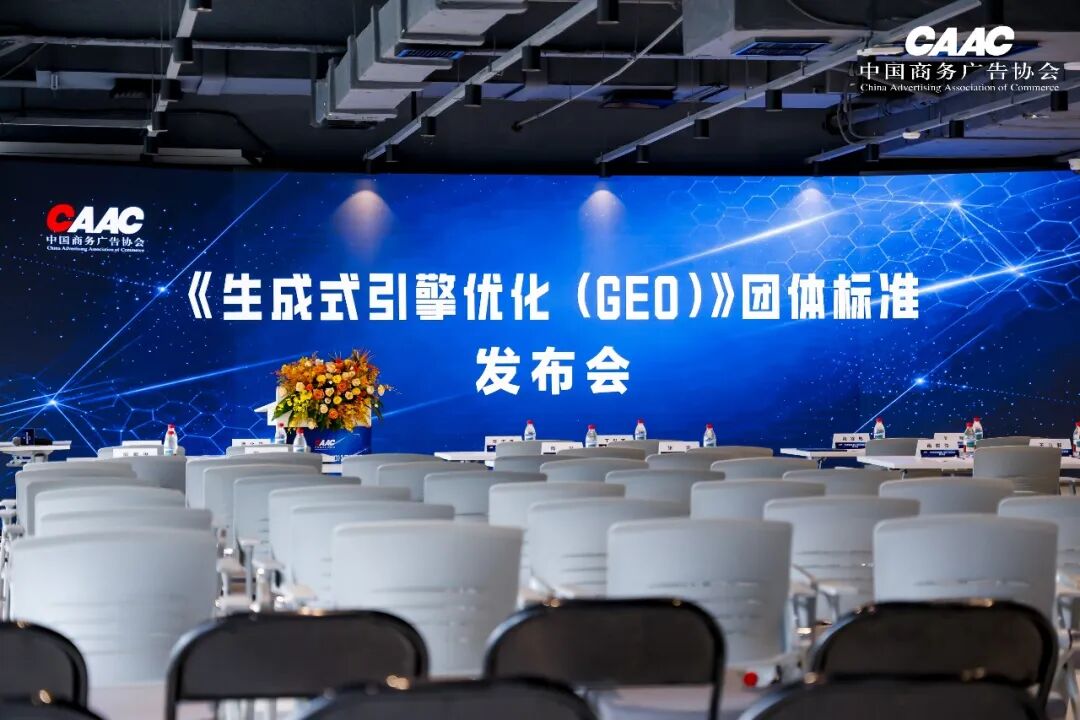
On the afternoon of October 16, the offline launch event for the Generative Engine Optimization (GEO) group standards (T/CAACCHINA 001–005—2026)—proposed and governed by the China Business Advertising Association (CBAA) and organized by its AI Marketing Application Committee—was successfully held at the Shanghai Digital Advertising Park. This was the first offline activity following the formal publication of the five standards on September 14, aimed at promoting their dissemination and implementation. Approximately 150 attendees were present, including association leadership, representatives of participating drafting organizations, some drafting experts, technical review experts, and feedback experts, as well as representatives from brands, digital marketing service agencies, and the media—a turnout that fully reflects the Chinese marketing industry's high regard for the standardization of GEO
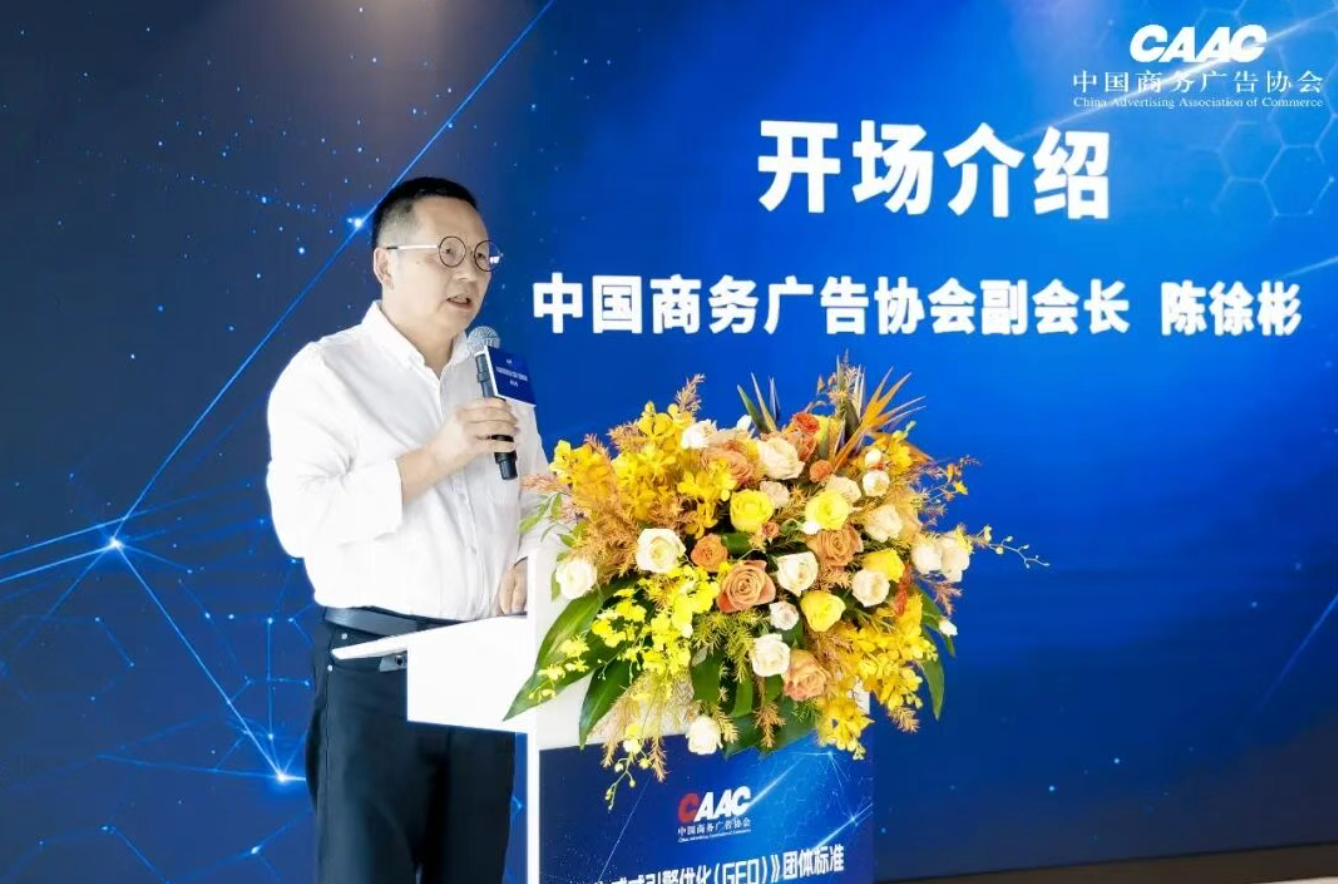
The event opened with a welcome address by Chen Xubin, Vice President of the China Business Advertising Association. He introduced the industry background behind the standards: generative AI is reshaping the underlying logic of information acquisition and brand communication, and while the GEO track has risen rapidly, irregularities such as terminology confusion, blurred service boundaries, inconsistent pricing standards, and "corpus poisoning" have troubled brand clients and constrained the industry's progress—which is precisely why the association took the lead in organizing the standards' development. He also explained the venue selection: Putuo District is home to one of the first national pilot digital advertising industry parks in China and the only one in Shanghai, aggregating over a thousand upstream and downstream digital advertising enterprises. The association hopes to take this industrial highland as a starting point, rooting the standards in the front lines of the industry to achieve mutual empowerment between standards and industry.
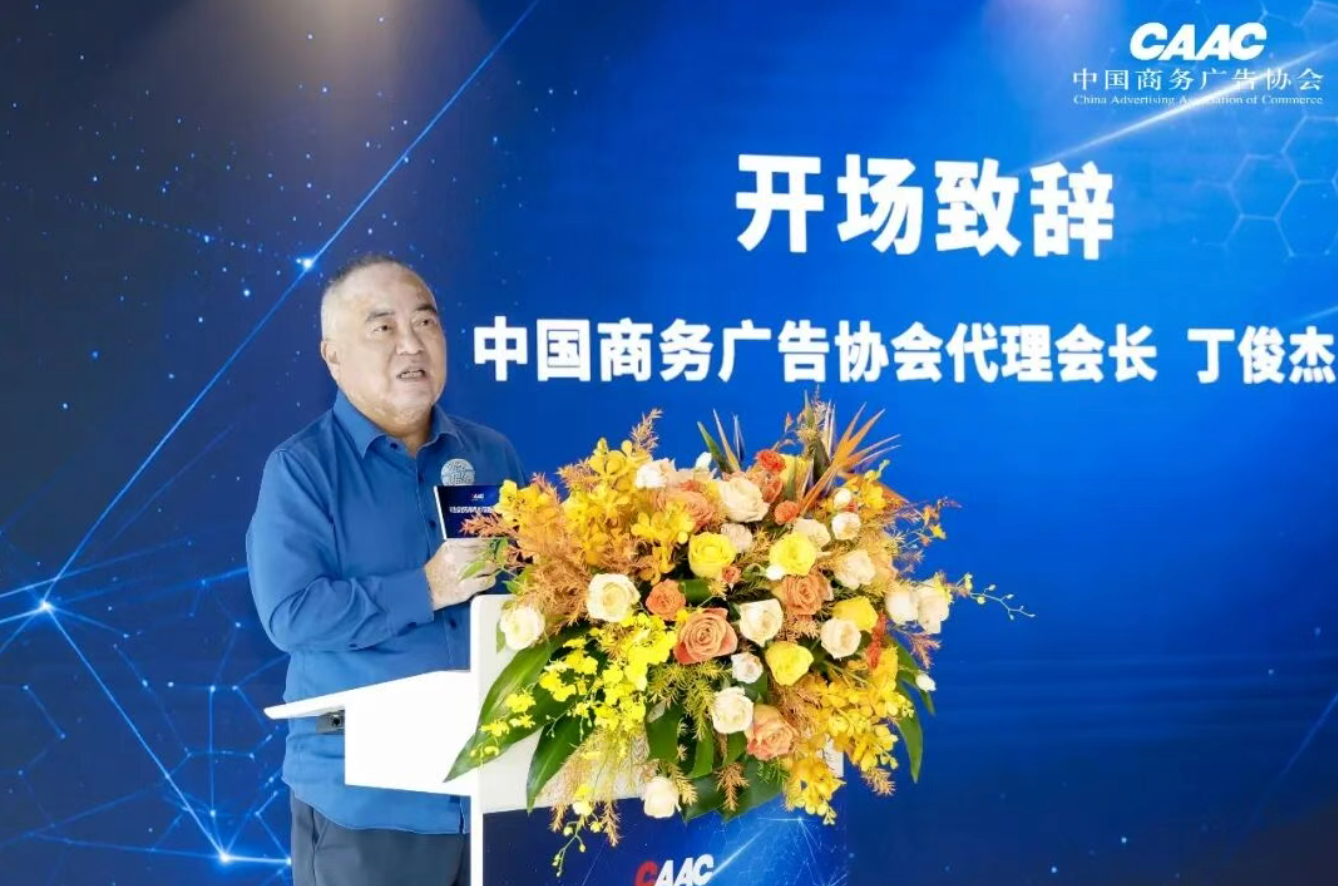
Subsequently, Ding Junjie, Acting President of the China Business Advertising Association, delivered an opening speech, explaining the value of the standards from the perspective of industry governance. He cited data from the "Clear and Bright: Rectifying AI Application Chaos" special governance campaign: by early July, the first phase had dealt with over 14,000 non-compliant AI products and cleared more than 6 million pieces of violating information, with malicious marketing using GEO technology explicitly listed as an AI data-poisoning behavior. "What the state is governing is exactly what these standards aim to solve—two sides of the same coin: regulation draws the red lines, focusing on correction; group standards establish the bottom lines, focusing on positive guidance." In his view, only by restraining and encouraging in coordination can the healthy and sustainable development of the new business form be promoted. Holding the first dissemination campaign for the first GEO group standard in China's internet advertising industry in Putuo is hoped to rely on the positioning of the digital advertising industry's pilot demonstration zone to explore a collaborative path of "policy guidance + industry self-discipline + market practice."
As Director of the Drafting Committee and Director of the AI Marketing Application Committee Office, Tan Beiping reported on the overall drafting work. He first outlined the industry landscape with data: according to CNNIC figures at the end of 2025, China's generative AI user base had reached 602 million with a penetration rate of 42.8%—the fastest-penetrating technology in history; the domestic GEO market is projected to reach 3 billion yuan in 2026, a year-on-year growth of 1,100%. Yet alongside this booming market, four major problems have become increasingly prominent—terminology confusion, uneven service quality, corpus poisoning, and the lack of effect measurement—which are the core reasons the association organized the standards' development.
Addressing these pain points and in accordance with the Regulations on the Administration of Group Standards, the drafting work proceeded intensively: at the end of March, a planning symposium established five drafting directions; in April, the standards were approved for initiation, the plenary assembly voted to adopt the working charter and formed the drafting committee; by the end of June the first draft was completed, integrated and unified in July, publicly solicited for comments in August, and revised article-by-article on September 2, passing technical review on September 9. Throughout the process, 41 participating organizations and 75 experts formed five working groups to draft and cross-review separately. During the public comment period, 174 opinions were received from 51 companies and experts, with adoption and partial adoption together accounting for 50%—exceeding expectations and completing the preliminary drafting tasks. The standards were officially released on September 14, taking only half a year from start to finish. After release, the standards quickly topped Weibo's trending searches and attracted widespread media attention.
The AI Committee Office also simultaneously conducted a scientific and technological novelty search, the results of which showed that the Generative Engine Optimization (GEO) group standards (T/CAACCHINA 001–005—2026) are the first GEO industry group standards in China and internationally. Currently, China Quality Press is advancing the standards' publication, and the association will continue to conduct training and dissemination to promote their implementation and application across the industry.
Tan Beiping briefly summarized the overall framework of the five standards: Part 1, General Theory, establishes common language and a technical framework; Part 2, Service Provider Evaluation Specification, provides a yardstick for assessing service provider capabilities; Part 3, Pricing, Evaluation and Measurement Specification, clarifies pricing and effect-measurement rules; Part 4, Trusted Corpus Specification, establishes a full-lifecycle governance system for corpora; and Part 5, Service Process Compliance and Security Requirements, delineates the bottom lines for service processes and security. The five standards correspond respectively to five objectives—"unified terminology, evaluable services, measurable effects, trusted corpora, and compliant processes"—covering the entire GEO service chain.
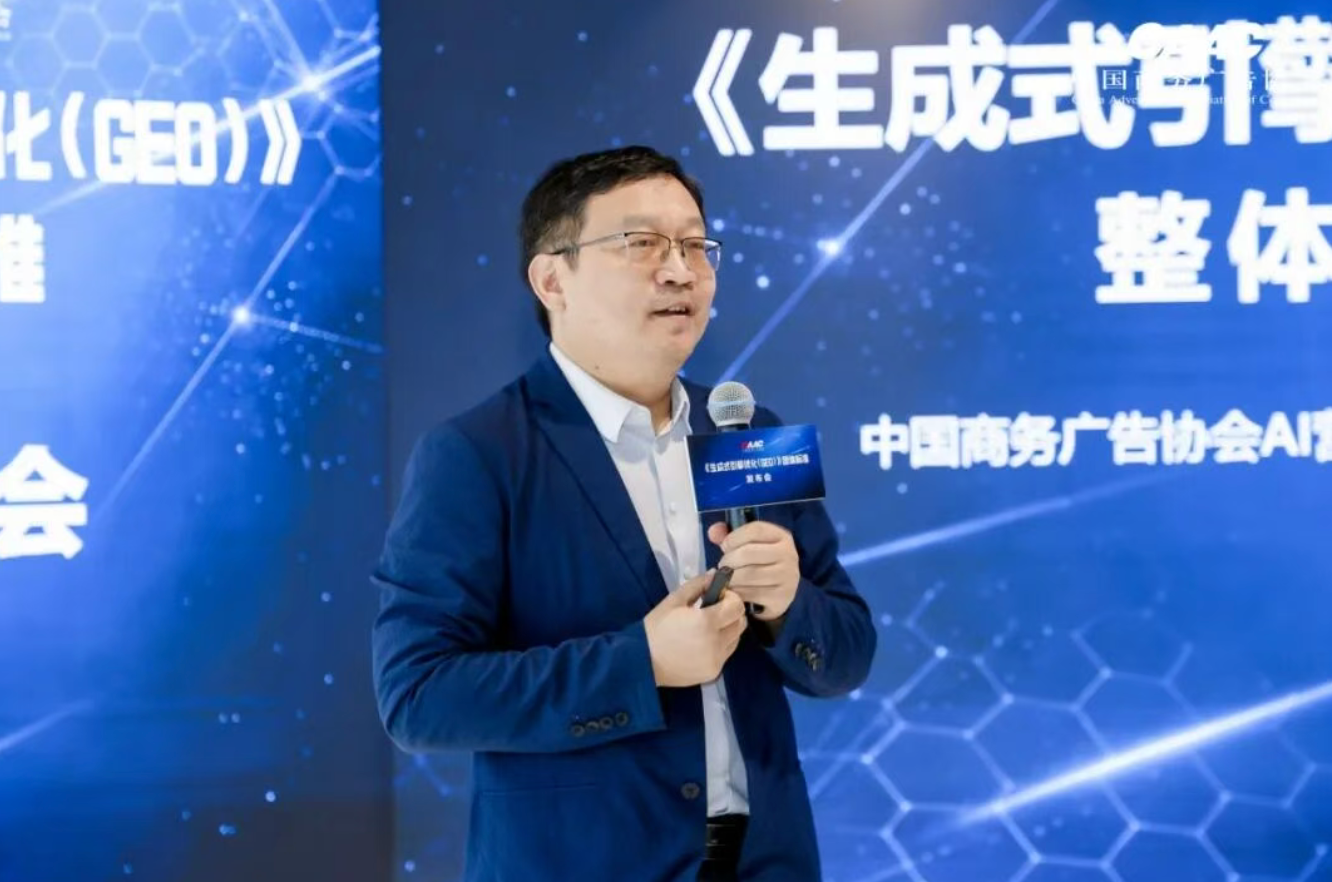
In the standards-interpretation segment, the five working group leaders took the stage in turn to provide a systematic interpretation of the standards' content, combined with their reflections during the drafting process.
Zhou Songtao, General Manager of the Product R&D Center at Leo Digital, was first to interpret Part 1, General Theory. As the shared foundation of the series, this part establishes the unified definition of GEO's "visibility, accuracy, and credibility," clarifies the relationship between GEO and SEO and AEO as "not a replacement but a layering," delineates the boundaries of black-hat GEO behavior, and presents a four-layer technical framework ranging from technical fundamentals to brand mindshare—only with this common language do the subsequent parts gain a unified premise.
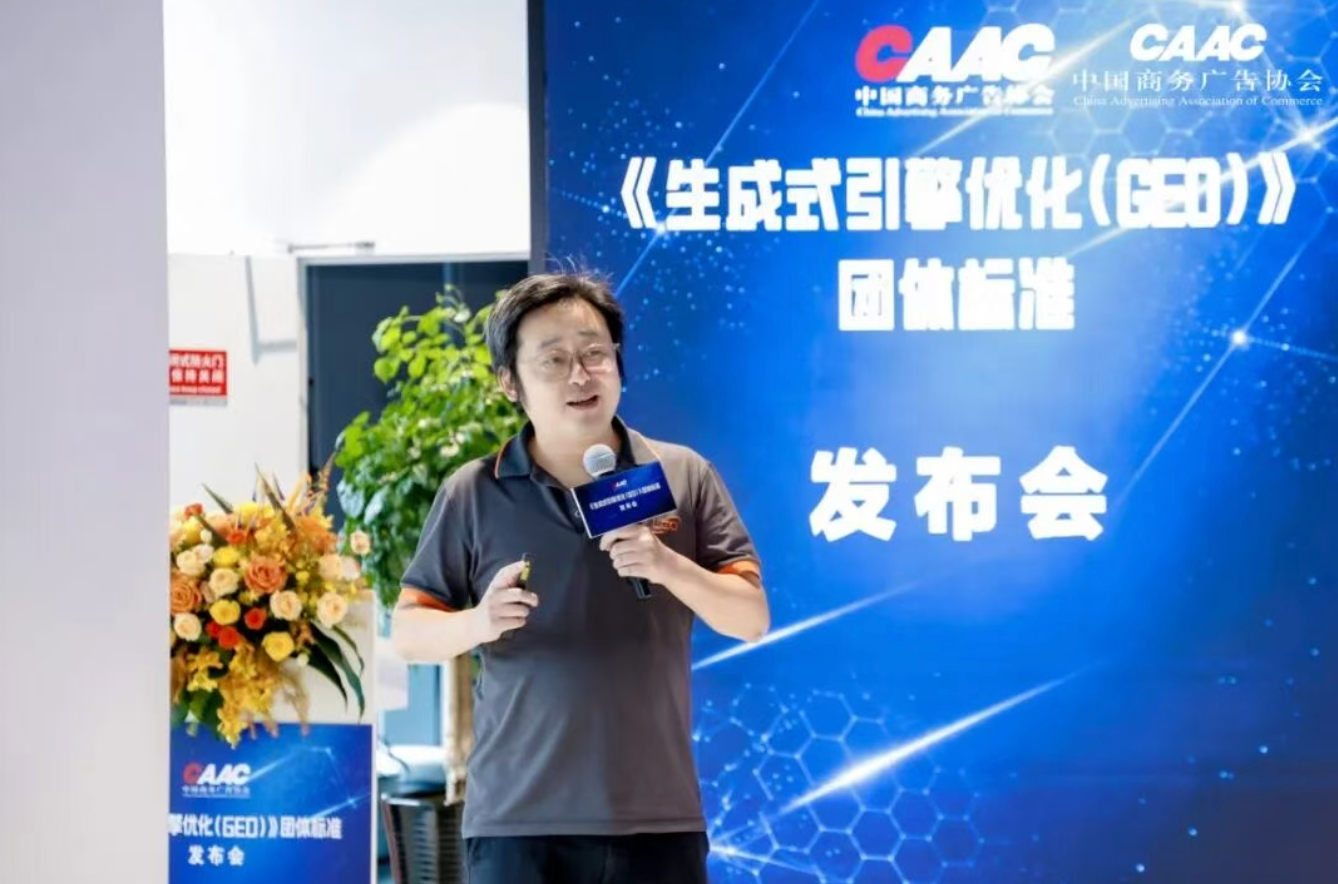
With a unified language in place, how should service providers be evaluated? Part 2, Service Provider Evaluation Specification, interpreted by Zhou Ri, AI Marketing Lead at Zhewen Interactive Group's Zhewen Tianjie, provides the answer: service providers are categorized by functional positioning into six types—content production, source construction, technical platforms, strategy consulting, data monitoring, and comprehensive services—establishing five evaluation dimensions and one veto item, with results graded A through D, providing brand owners with an objective yardstick for selecting service providers.
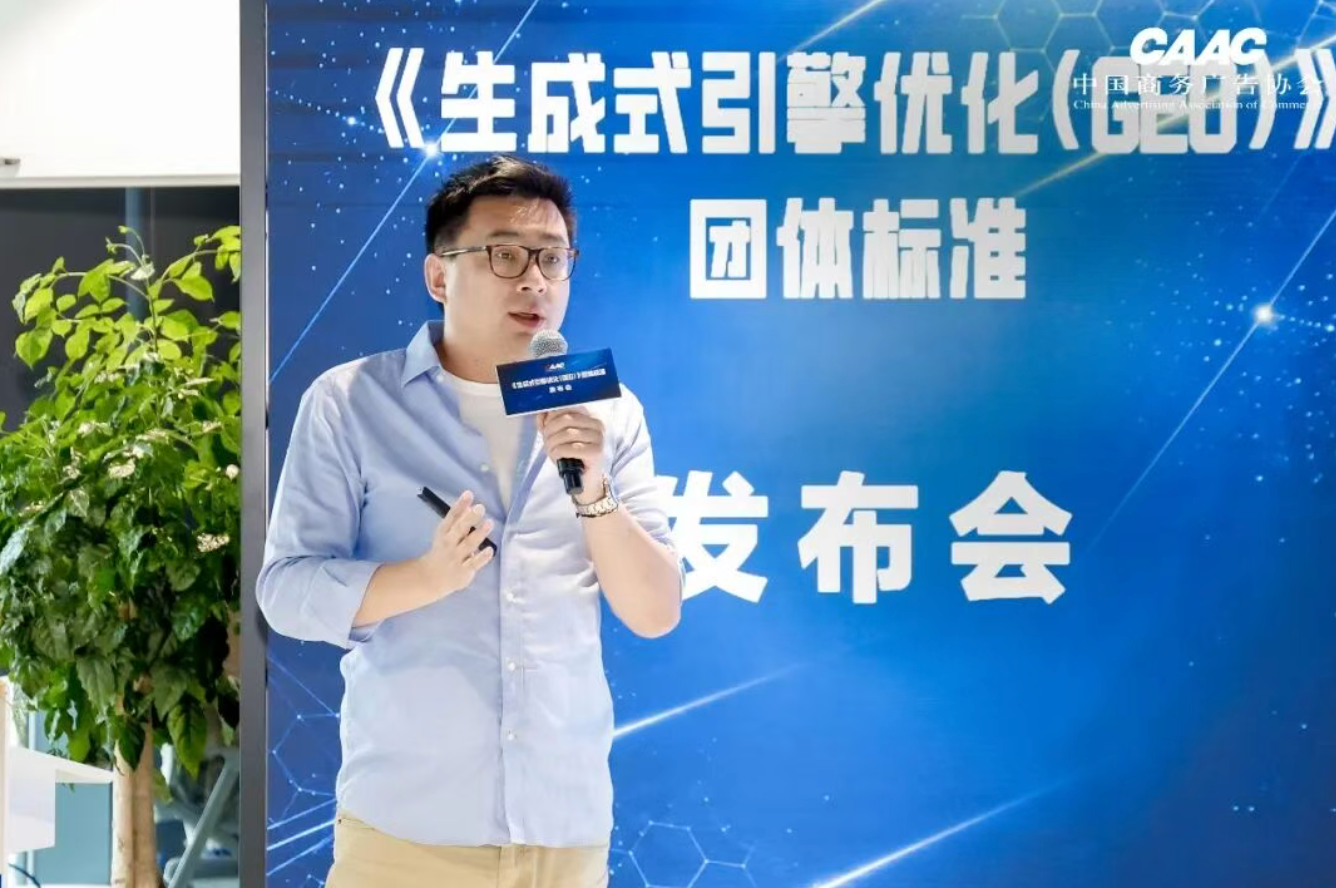
With service providers selected, how should collaboration be priced and effects measured? Part 3, Pricing, Evaluation and Measurement Specification, interpreted by Zhao Xilin, GEO Product Lead at Minglue Technology Group, responds to the core concerns of the transaction stage: defining seven types of minimum pricing units and five pricing models, and unifying nine effect indicators such as visibility rate and visibility share, along with reproducible measurement criteria, making GEO's input-output measurable and verifiable for the first time.
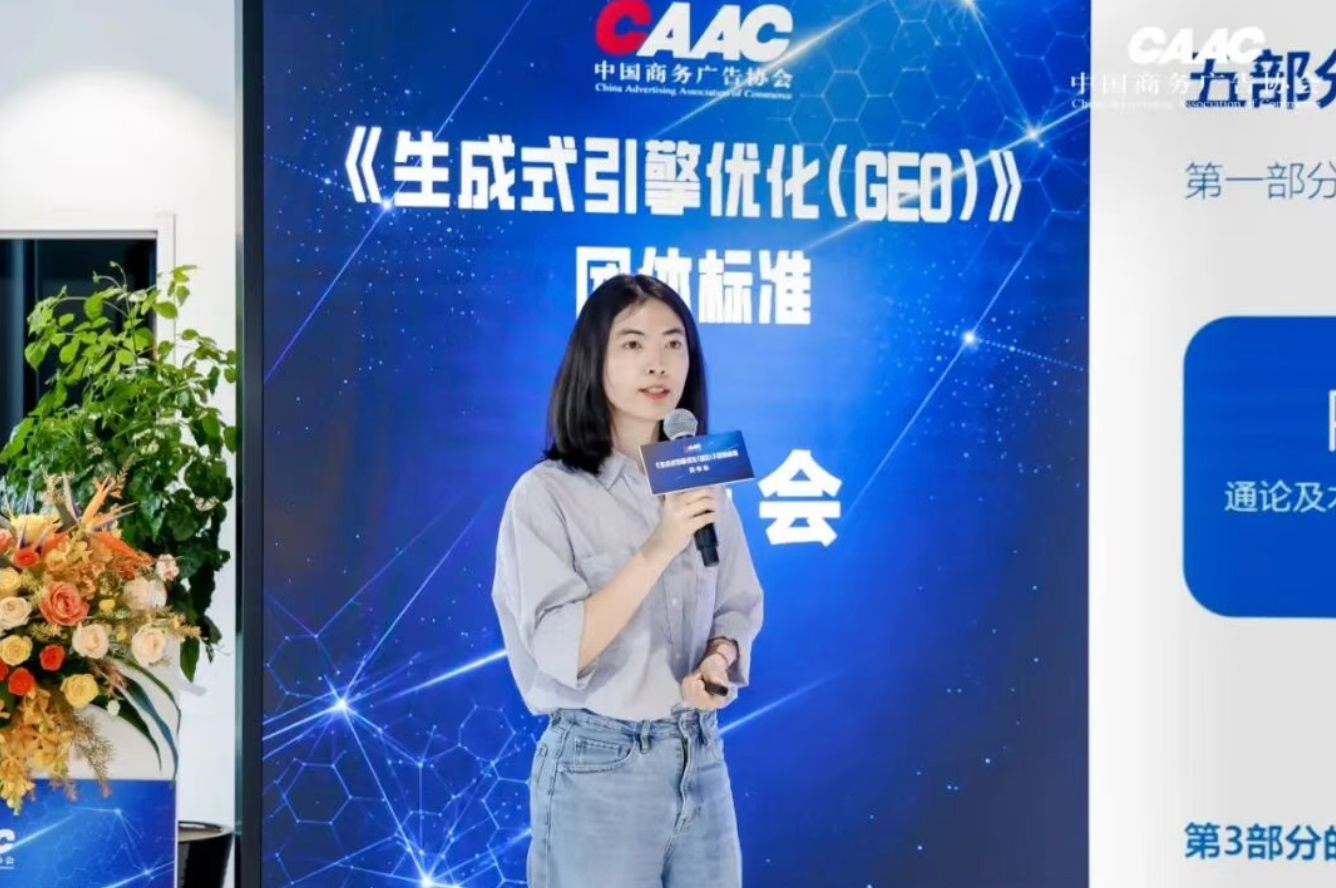
The foundation of GEO services lies in content. Part 4, Trusted Corpus Specification, interpreted by Zhang Yan, Head of Marketing and Brand at Zhihu, focuses on corpus governance: establishing a corpus credibility tier and source-admission mechanism based on five dimensions—authority, professionalism, authenticity, timeliness, and content quality—implementing enhanced management for high-compliance-requirement industries, and establishing processes for recalling, taking down, and replacing problematic corpora, thus safeguarding the AI information ecosystem.
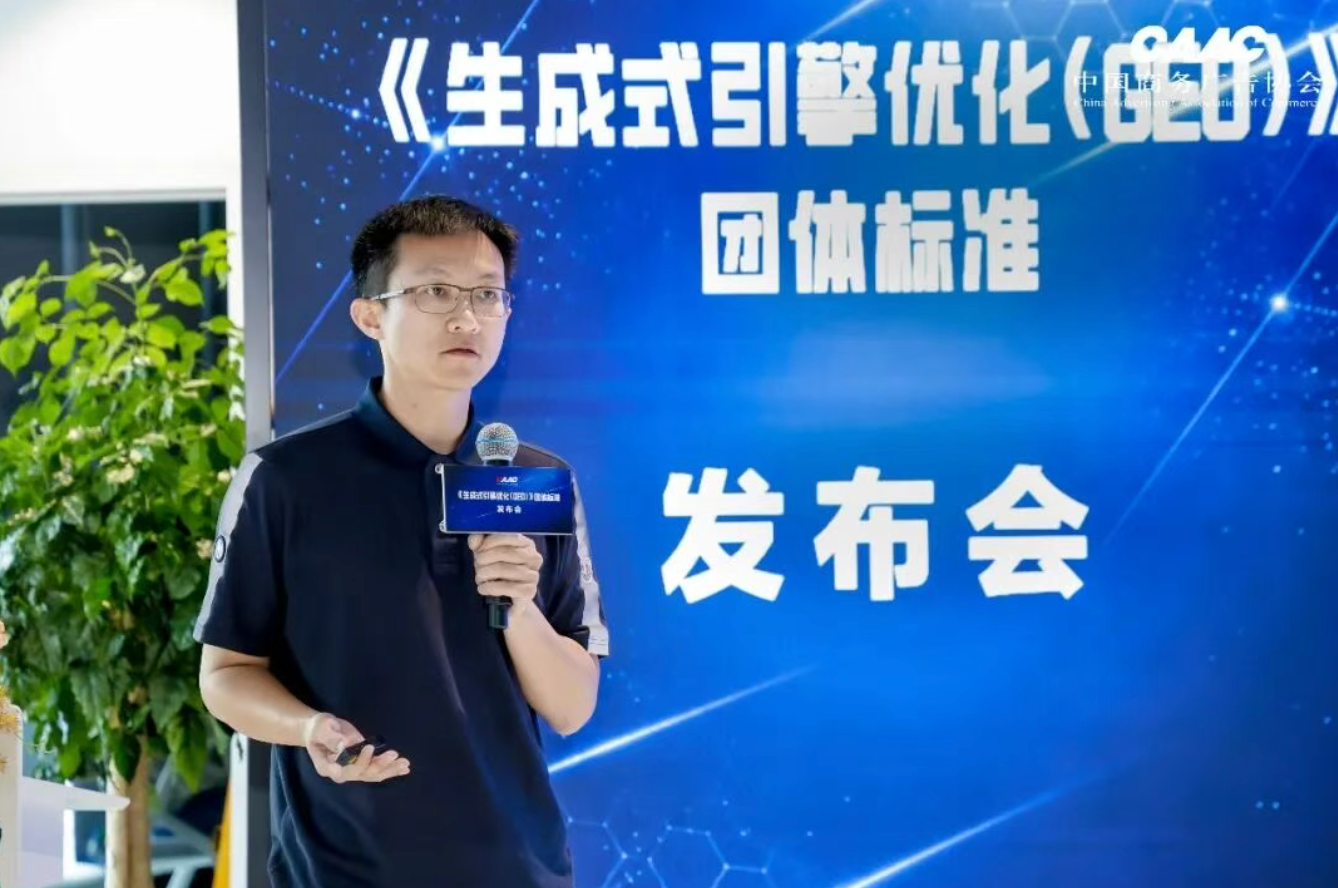
Finally, Part 5, Service Process Compliance and Security Requirements, interpreted by Wang Lixin, Co-founder and CTO of PureblueAI (Qinglan), translates compliance requirements into day-to-day operations: establishing a seven-step full-process control from client admission to risk disposal, clarifying three bottom lines—"auditable, not overstepping, no guarantees"—and delineating the boundary between positive optimization and black-hat techniques, providing operational guidance for service providers' compliant operations.
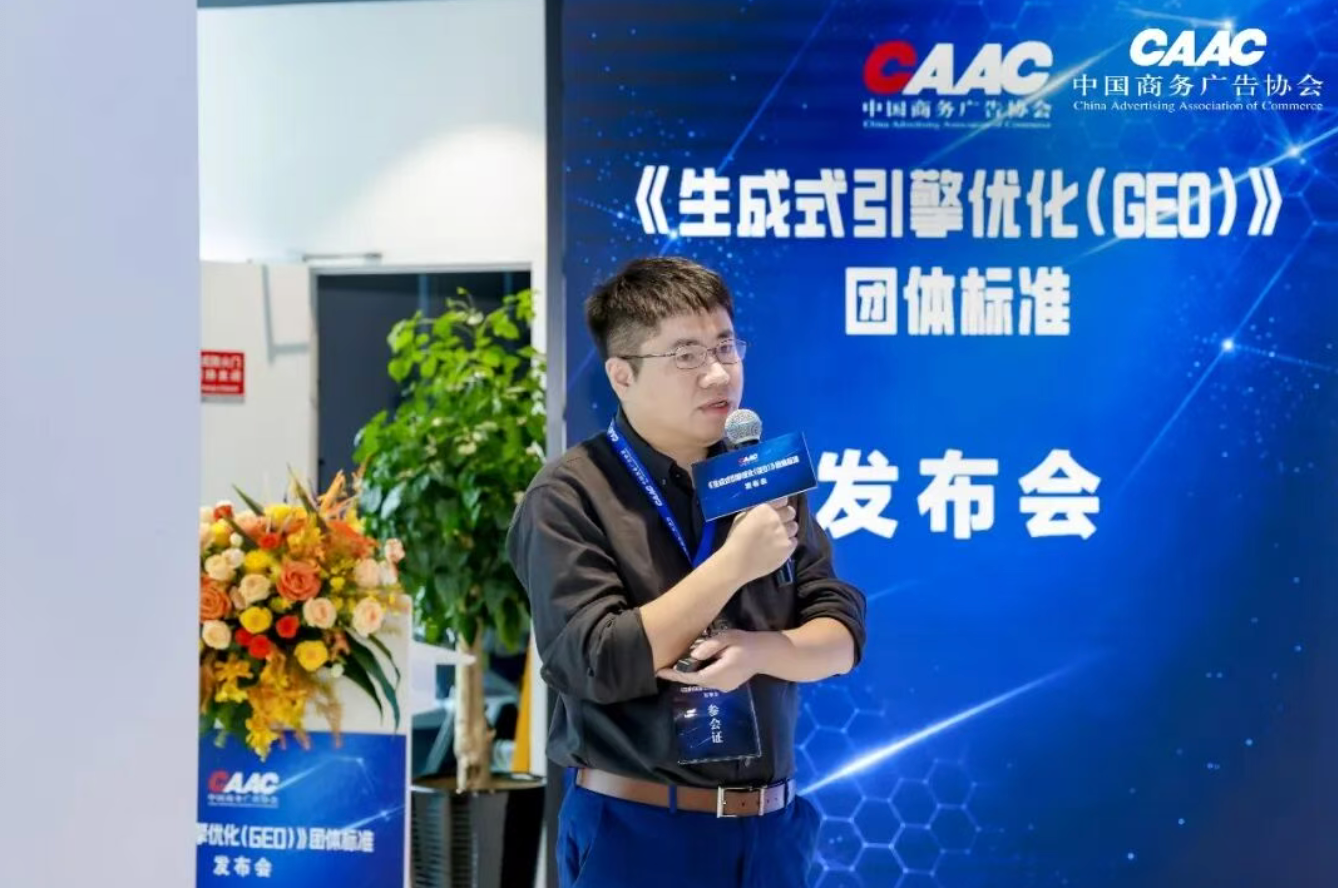
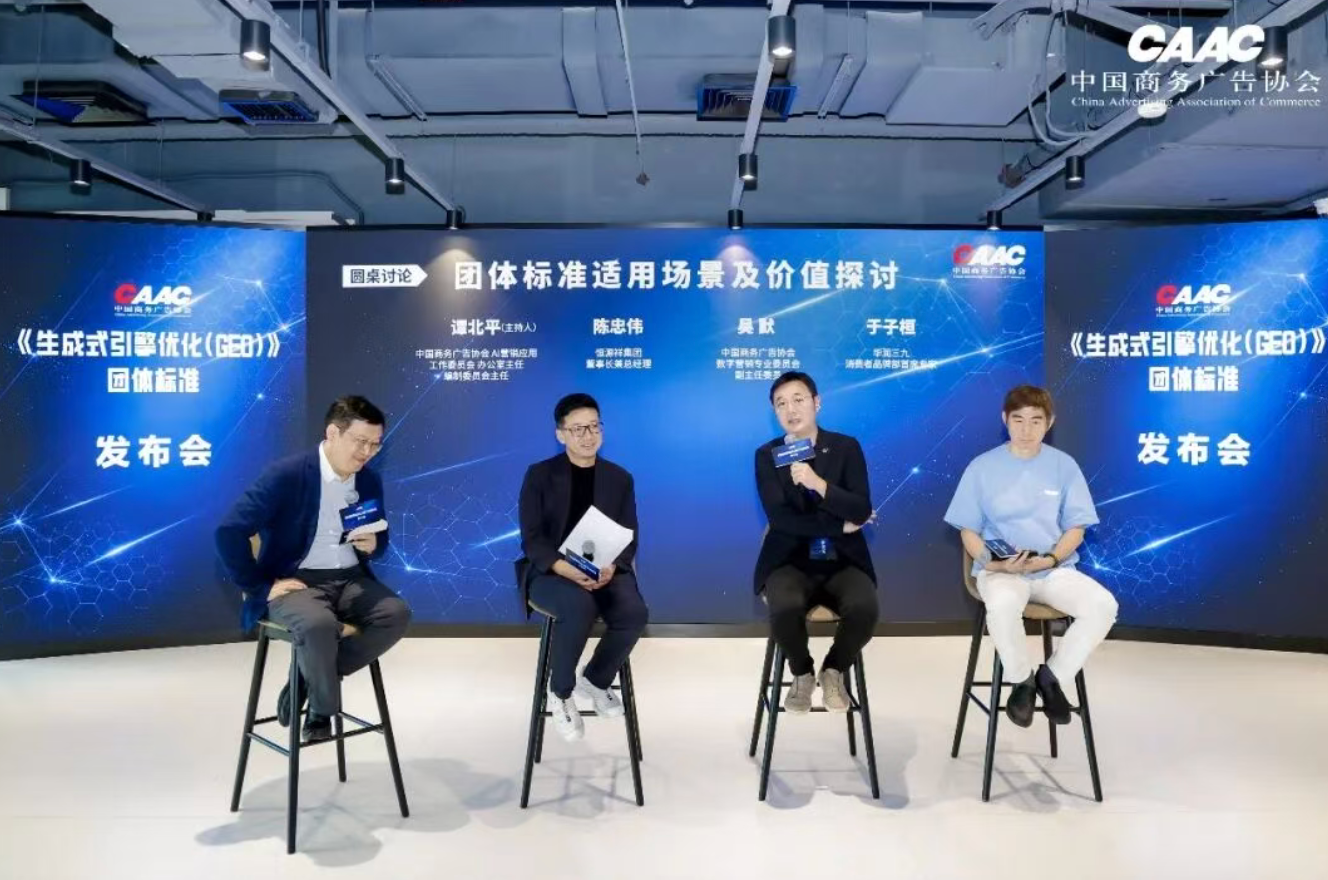
The roundtable discussion, hosted by Tan Beiping, featured three guests: Chen Zhongwei, Chairman and General Manager of Hengyuanxiang Group; Wu Mo, Deputy Director of the CBAA Digital Marketing Professional Committee; and Yu Ziheng, Chief Expert of the Consumer Brand Department at China Resources Sanjiu. They exchanged views around three topics: the role of group standards in GEO industry development, how demand-side and supply-side parties can better apply the standards, and expectations for industry associations.
Chen Zhongwei of Hengyuanxiang spoke from the brand owner's lived experience. He stated that the most important thing in brand communication is enabling consumers to "find it and trust it," yet today's AI-generated information is increasingly hard to predict and judge, with counterfeit and substandard content even amplified by ad spend, leaving brand owners very passive; China has the widest and deepest application of AI, and thus faces the most complex problems, making the standards' introduction "very necessary." He also cautioned that the standards are only a beginning—group standards are not enforcement standards. On one hand, the social trust system must be continuously improved on the basis of the standards; on the other, active recommendations should be made to relevant state departments to push group standards into the sequence of enforcement bases in the future, forming genuine binding force. "The market economy is built on trust; without a trust system, all value collapses."
Wu Mo, Deputy Director of the CBAA Digital Marketing Professional Committee, combined frontline platform observations to point out that a vast gap previously existed between the "value of science popularization" and "market implementation" in the AI era, with the market flooded by over-promises like "make your brand dominate the screen" and "rank first in AI search." The introduction of the standards truly provides enterprises with a basis that is measurable, manageable, traceable, and even accountable—which is also why the release immediately topped trending searches and sparked tens of millions of reads and discussions. In his view, for demand-side parties, the standards are a procurement reference—content-production types should be judged on quality content production capability, source-construction types on source authority, and data-monitoring types on objectivity and accuracy; for service providers, the standards offer a more compliant and standardized way of operating. He also suggested the association continuously conduct standards dissemination training, select and reward benchmark applications based on the standards, and establish a bad-faith information-sharing mechanism among member entities, so that the industry has a reference for "doing good" and a warning for bad faith.
Yu Ziheng of China Resources Sanjiu viewed the standards' value from a long-termism perspective. He stated that the standards let brand owners "know what kind of approach to use for collaboration" when facing new opportunities, thus daring to invest long-term and accumulate steadily rather than chasing momentary effects; AI large models are essentially probabilistic systems, and consumers' emotions can influence output results—the implementation of standards can assist the large models of various ecosystems in outputting correct knowledge, ultimately helping consumers obtain trustworthy information. Regarding industry associations, he hopes the standards can play an assistive and guiding role in the content and service recommendations of major model ecosystems.
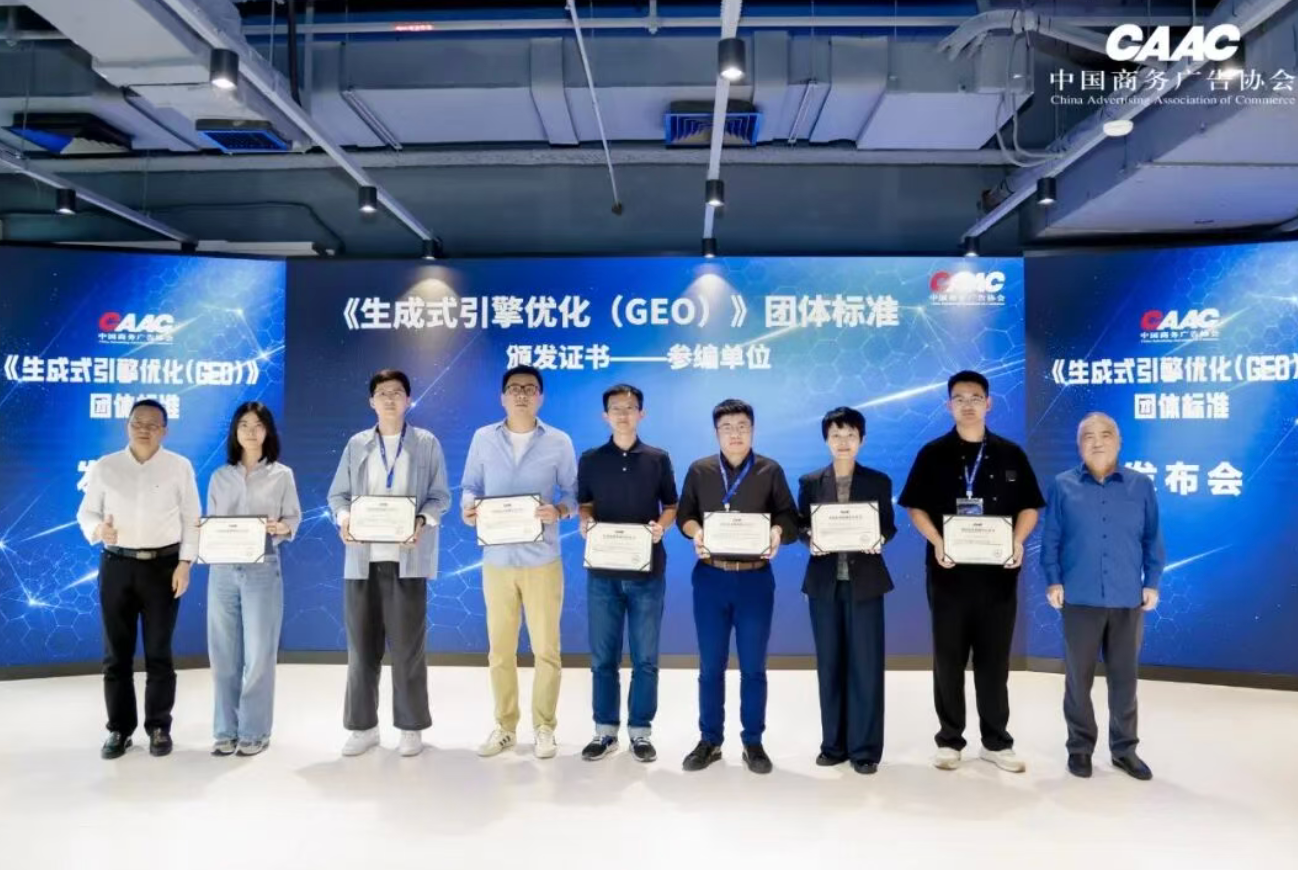
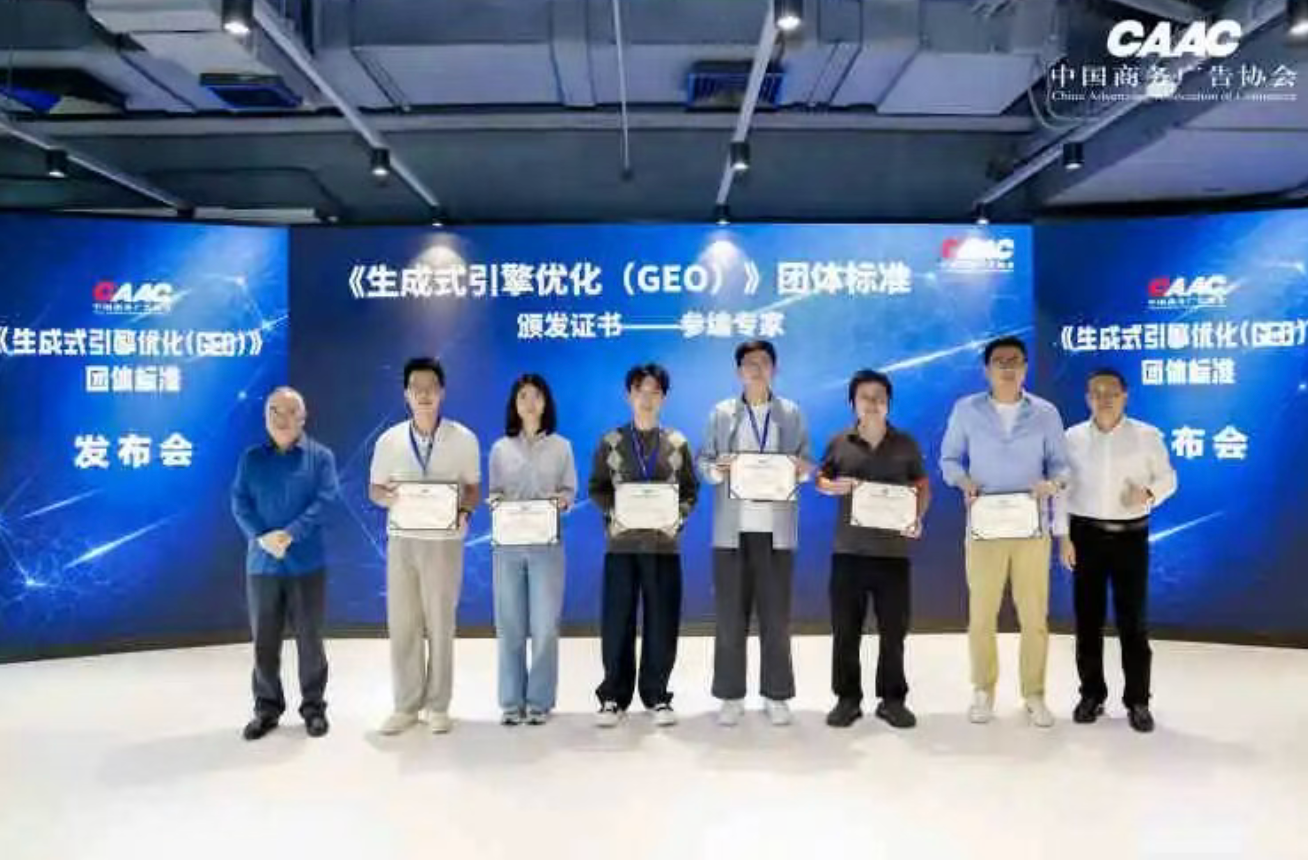
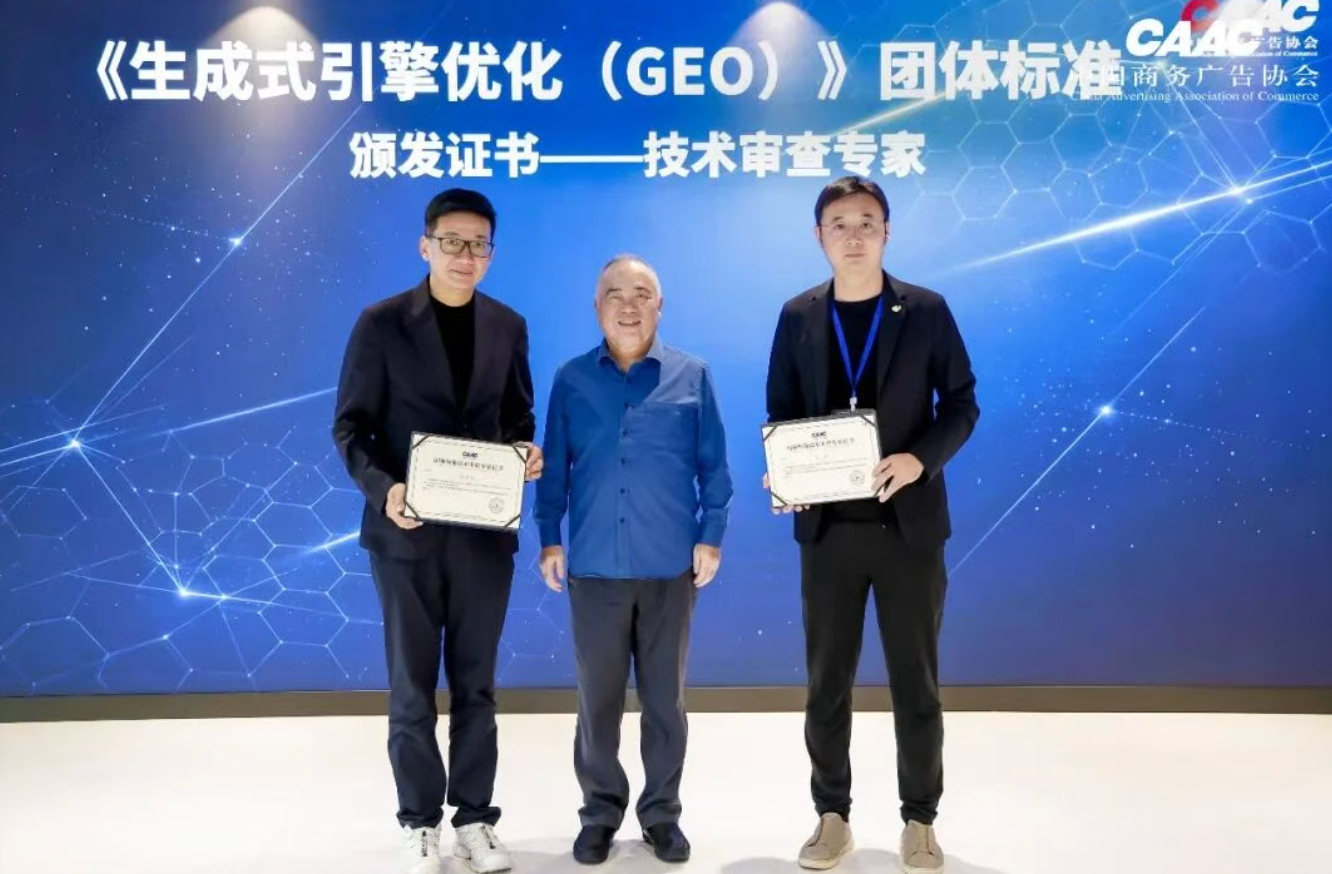
The meeting then held a certificate-awarding ceremony, presenting certificates to participating organizations, drafting experts, and technical review experts in attendance, paying tribute to their professional contributions during the drafting and review process. The roster is as follows:
I. Participating Enterprise List (41 companies, in no particular order): Leo Group Digital Technology Co., Ltd.; Zhewen Interactive Group Co., Ltd.; Beijing Minglue Zhaohui Technology Co., Ltd.; Beijing Zhihu Network Technology Co., Ltd.; Beijing Qinglan Zhihui Technology Co., Ltd.; Weimeng Creative Network Technology (China) Co., Ltd.; iFLYTEK Co., Ltd.; Shanghai Xinbang Information Technology Co., Ltd.; Shanghai Manlang Marketing Planning Co., Ltd.; Shanghai Yuanyi Information Technology Co., Ltd.; Changrong Media Co., Ltd.; Publicis Groupe; Shanghai Mingtang Culture Communication Co., Ltd.; Chongqing Linghu Technology Co., Ltd.; Shanghai Himalaya Technology Co., Ltd.; Shanghai Zhianhua Digital Technology Co., Ltd.; Shanghai Zhitui Times Technology Co., Ltd.; Wuhan Dangxia Technology Co., Ltd.; Netconcepts Network Technology (Beijing) Co., Ltd.; Beijing Shenyan Intelligent Technology Co., Ltd.; Tamei Times (Shanghai) Artificial Intelligence Technology Co., Ltd.; Infinite Growth (Beijing) Intelligent Technology Co., Ltd.; Beijing Yooli Interactive Digital Technology Co., Ltd.; Beijing Shanshu Intelligent Technology Co., Ltd.; Shudao Electronic Technology (Shanghai) Co., Ltd.; Chengdu Qilin Zhimei Culture Communication Co., Ltd.; Shanghai Zhen'ao Shuzhi Technology Co., Ltd.; Shenzhen Zhihui Lanmei Technology Co., Ltd.; Suzhou Wendao Network Technology Co., Ltd.; Zhiwei Technology (Beijing) Co., Ltd.; Haizhijian Information Technology (Beijing) Co., Ltd.; Fuzhi Zhiyun (Shanghai) Technology Co., Ltd.; 360 Technology Group Co., Ltd.; Beijing Sohu New Media Information Technology Co., Ltd.; Guangzhou Huanwang Technology Co., Ltd.; Guangdong INTHREE Brand Marketing Group Co., Ltd.; Beijing Tebi'ang Technology Co., Ltd.; New Galaxy AI ; Nanjing Xiaoliebian Network Technology Co., Ltd.; Huishibo Mei Culture Development (Guangzhou) Co., Ltd.; Wuhu Xiaoxiangyuan Education Technology Co., Ltd.
II. Participating Expert List (in no particular order): Zhou Songtao, Wu Fujie, Zhang Haoran, Zhou Ri, Zhao Xilin, Wang Yun, Wang Ziguan, Ma Jisheng, Zhang Yan, Sang Tian, Li Yubo, Lu Yang, Wang Lixin, Mao Guirong, Li Ming, Zhao Mingming, Liang Yanan, Wang Xianchao, Fang Yuhua, Yu Haipeng, Zhao Jinduo, Zhou Xiaoyu, Wu Zhe, Gao Peng, Yuan Hao, Ye Jingwei, Song Mingyu, Hou Yi, Zeng Jie, Zhong Jiawei, Huang Shuyu, Bi Wenlong, Li Nuoshi, Zhang Yan, Yu Jie, Liu Wenming, Yang Yizhou, Xiao Kun, Shang Jing, Li Yang, Deng Lifan, Zhang Hao, Wang Jian, Ma Xiaoting, He Bin, Yan Xiaoling, Zhang Guopeng, Li Wenzhe, Cai Xiaoxu, Ji Chenliang, Wei Qian, Miao Jianwang, Lü Hujun, Pang Chengbo, Zhang Longfei, Feng Yujian, Zhan Mengmeng, Li Zhe, Wang Xi, Jing Lei, Chen Mingang, Fu Haibo, Niu Tingting, Hou Yan, Wen Ya, Lin Ting, Li Qi, Xu Yizhao, Zhang Jingyi, Zhou Binbin, Qiu Wenbin, Lin Huangbin, Yuan Xuewen, Zhang Dongqing, Luan Yiwen, Zhou Lei, Liu Jiaqi, Tan Beiping, Li Haoyu, Zhang Hui
III. Technical Review Committee List (in no particular order): Ding Junjie (Acting President, China Business Advertising Association); Chen Xubin (Vice President, China Business Advertising Association); Chen Zhongwei (Chairman and General Manager, Hengyuanxiang Group); Wu Mo (Deputy Director, CBAA Digital Marketing Professional Committee); Tang Xingtong (Digital Business Innovation Consultant); Ren Peng (Marketing General Manager, China Region, Haier Smart Home); Li Dan (CMO and E-commerce Business Unit General Manager, Sysco Foods); Yan Xiwen (CEO, Maide Guangnian); Quan Jiaxin (CMO and E-commerce Director, Perfetti China).
In his closing remarks, Ding Junjie, Acting President of the China Business Advertising Association, again offered congratulations on the formal release of the standards and thanked all participating organizations, drafting experts, technical review experts, and feedback experts. He stated that group standards are both the industry's bottom line and its backbone—not rigid rules, but a safe runway drawn for innovation, propelling the industry from the "chaotic era" of technological frenzy to the "ordered era" of regulation. He set forth three expectations for the standards' implementation: the entire industry should proactively learn and apply the standards, internalizing norms into business processes; continuously track new market phenomena and dynamically iterate and improve the standards; and adhere to "AI for efficiency, brand keeps the soul," letting human judgment, professional ethics, and long-termism always remain the industry's indispensable core.
The value of standards extends beyond the moment of release. From "link-orientation" to "answer-orientation," GEO is reshaping the way brands connect with users. The standards bring the industry a common language, a verifiable yardstick, and a clear compliance bottom line—making brand owners' investments assessable, service providers' operations guided, and innovation rule-bound and value measurable.
The successful holding of this launch event marks GEO group standards entering a new stage of dissemination and implementation. The association will continue to link up with local governments, industrial parks, research institutions, and enterprises to promote the mutual empowerment of standards and industry, guiding the sector from experience-driven to standards-driven, helping Chinese brands navigate steadily and far in the AI era, and contributing Chinese practice to the global standardized development of generative marketing. This launch event was hosted by Li Haoyu, Deputy Director of the AI Marketing Application Committee Office of the China Business Advertising Association.

Social institutions may obtain the full text of the standards through the following two portals: 1) Log in to the National Group Standards Information Platform (www.ttbz.org.cn) and search for Generative Engine Optimization (GEO) to view the five group standards; 2) Log in to the CBAA official website (www.caacchina.org), notification and announcement section, to download the complete electronic version of the Generative Engine Optimization (GEO) group standards.